Version 1.1, October 2026

Data Centre Project Schedule Checklist.

A senior planner's review list for data centre programmes that have to survive design change, long-lead equipment and staged energisation.

The building is rarely the thing that decides a data centre handover date. Usually it's the equipment chain and commissioning: the transformer that ships late, the generator FAT that slips, the grid connection that turns out to have been one milestone with no logic behind it.

This checklist is the structured pass I make on a data centre programme before I talk to the site team or the client. It's built for tender programmes, baselines and monthly updates on Australian projects.
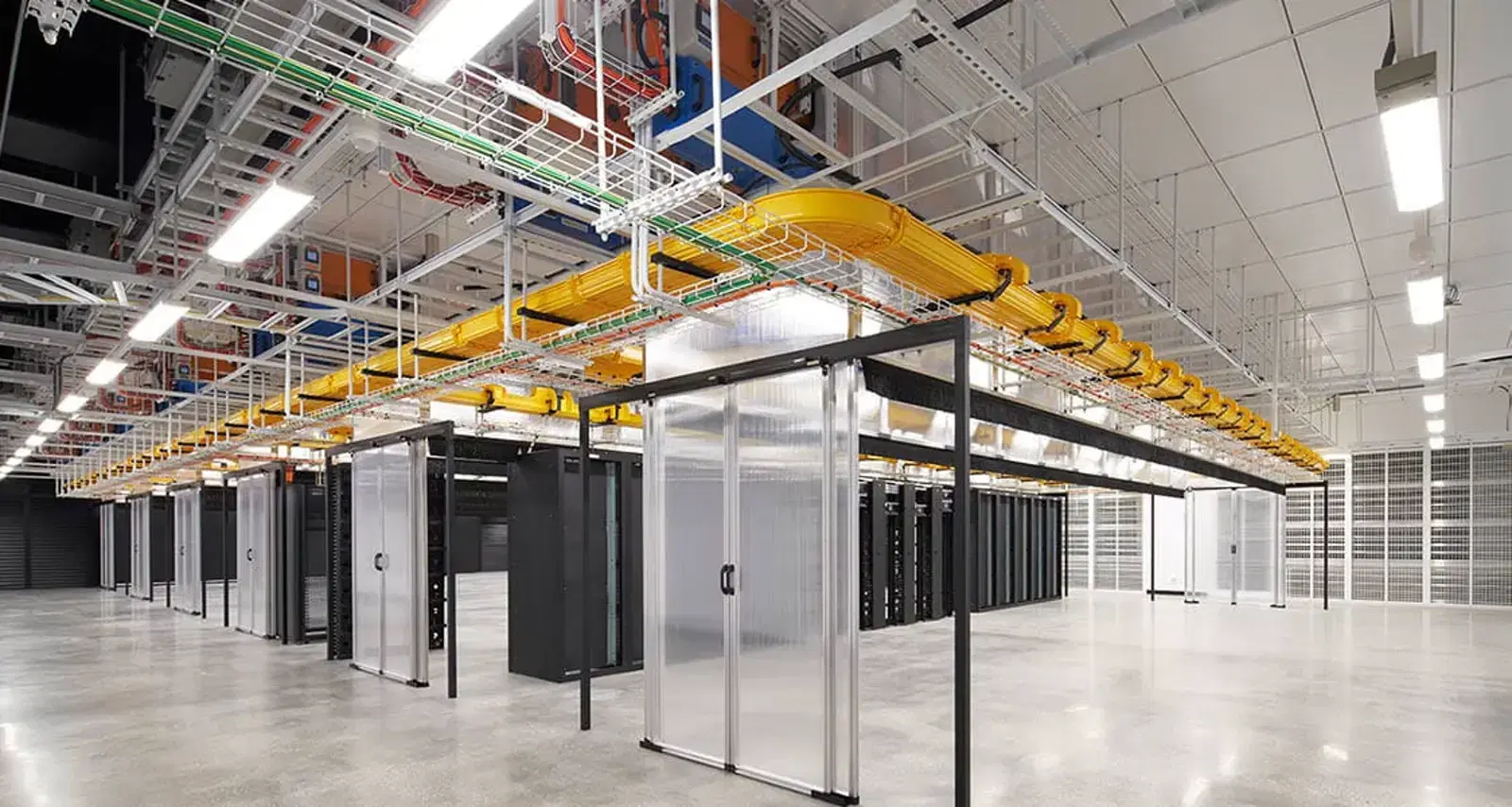
Data hall with server racks and containment
Review areas
11sections
Check items
84
Commissioning
L1to L5

What's in the download

  • 84 checks across 11 sections: programme basis and WBS, key milestones, logic and critical path quality, procurement and long-lead tracking, design and authority interfaces, MEP and fit-out per data hall, L1 to L5 commissioning and IST, handover, baseline and updates, risk and contingency, and reporting.
  • A sourced long-lead page showing what published data actually says about Australian lead times, and where no Australian figure exists.
  • An L1 to L5 commissioning gate diagram, with the energisation hold point marked.
  • A one-page quick review: 12 questions to ask of any data centre programme.
  • A long-lead tracker (XLSX and CSV) prefilled with 19 equipment lines.

Who it's for

Data centre developers, tier 1 builders, project directors, planners and commissioning managers working on Australian projects.

Four questions for every long-lead item

  1. 01Was the submittal approved before the order went in?
  2. 02What is the required-on-site date, and how far is the vendor's date from it?
  3. 03Is MV cable, busway, BESS and fuel on the list, or only the usual transformers, switchgear and generators?
  4. 04Which factory test releases it to ship, and which site checks wait on its delivery?

Why lead times matter right now

  • Some Australian generator sets have lead times of 70+ weeks (Linesight, 16 Jul 2026).
  • Half of the Australian and New Zealand markets tracked by Turner & Townsend report generators taking more than 41 weeks to reach site (Global Construction Market Intelligence 2026, July 2026).
  • Hitachi Energy Australia says high voltage transformer lead times have "basically doubled" (Australian Manufacturing, 6 Aug 2026).

Checklist sections

01

Programme basis and WBS

9 checks

  • Project calendar, working hours and holiday calendars are stated and applied consistently across contractors and owners.
  • Work breakdown structure (WBS) aligns to contract packages, not only to a cost code dump.

02

Key milestones

8 checks

  • Planning approval gates (planning permit in Vic; DA, or SSD consent for State significant projects, in NSW) are dated, with the responsible party clear.
  • Building permit (Vic) or construction certificate (NSW), or the state equivalent, is linked to the start of constrained works.

03

Logic and critical path quality

10 checks

  • Open ends (missing predecessors or successors) are justified or closed. Dangling work cannot support entitlement arguments.
  • Hard constraints (Must Start/Finish On in MSP, Mandatory Start/Finish in P6) are rare, documented and not used to hide float.

04

Procurement and long-lead tracking

12 checks

  • Every long-lead package is modelled as linked activities, not a single delivery date: specification, tender, award, submittal review (with the contract's review and resubmission durations), approval, manufacture, FAT, ship, port and biosecurity clearance, delivery and install.
  • The long-lead register covers the full list: HV and MV transformers, HV, MV and LV switchgear, generators, fuel systems, UPS, UPS batteries, BESS, ATS and STS, chillers and heat rejection, CRAHs or fan walls, CDUs, MV cable, busway, and controls and EPMS panels.

05

Design and authority interfaces

6 checks

  • Design release gates (IFC packages by discipline and area) precede the construction activities that need them.
  • Design change and RFI turnaround allowances match the contract response times, not zero-float optimism.

06

MEP and fit-out sequencing per data hall

6 checks

  • Each data hall has a clear sequence: structure readiness, services rough-in, equipment set, containment, fit-out, test.
  • Shared central plant vs hall-level distribution is sequenced so halls are not falsely shown as independent.

07

Commissioning levels L1 to L5 and IST

10 checks

  • Commissioning levels L1 to L5 are defined the same way the project Cx plan defines them.
  • L1 factory tests release plant to ship. L2 delivery inspection and installation verification are prerequisites to energised testing.

08

Handover and client acceptance

5 checks

  • Handover deliverables (O&M, training, spares, warranties, certificates) are activities with predecessors.
  • Client and operator acceptance criteria match the contract and the commissioning completion definitions.

09

Baseline, updates and progress measurement

6 checks

  • A formal baseline exists, is approved and is stored separately from the live update file.
  • Update cycle (weekly, fortnightly or monthly) and data date discipline are defined.

10

Risk and schedule contingency

6 checks

  • Schedule contingency location is deliberate: end of path, before contractual PC, or at known risk gates.
  • Known risks (grid, long-lead plant, authority, labour, weather for early works) have mitigation activities or time allowances.

11

Reporting

6 checks

  • The executive report shows critical path, milestone variance and top drivers in plain language.
  • The look-ahead (3 to 6 weeks) matches what supervisors will actually crew and coordinate.

Download the free checklist pack

Enter your details and we will email the pack. We use your details to send the files and, if relevant, follow up on your interest. No mailing list spam.

About Nomad SPS

Nomad SPS is a Melbourne project planning and project controls consultancy. We have more than fifteen years of experience in data centres, renewable energy and rail, working in Primavera P6 and Microsoft Project. That covers programme reviews, baselines, commissioning schedules and delay analysis.

Want a second pair of eyes on your programme? Book a 30-minute call.

Nomad SPS · Melbourne · nomadsps.com.au. Related reading: long-lead equipment lead times, data centre construction programme guide.